
Tallapoosa County Arrest Records and Charges
Tallapoosa County arrest records begin on the law-enforcement side. They can identify the arresting agency, person arrested, booking event, alleged offense, and custody or bond context. The Tallapoosa County Sheriff's Department is at 316 Industrial Park Drive in Dadeville and can be reached at (256) 825-4264. No official county web jail roster was located in the sources reviewed, so current county custody should be checked with the sheriff rather than assumed from a court search.
The charge record begins when a complaint, information, indictment, or other valid charging instrument enters court. The Fifth Judicial Circuit District Attorney prosecutes criminal cases for the State and decides or presents formal charges within the legal process. The Circuit Clerk's Criminal and Warrants divisions maintain the court-side entries. Alexander City Municipal Court and Dadeville Municipal Court maintain their own city matters. Court charges after arrest can change as evidence, grand-jury action, negotiation, and rulings shape the case.
These records answer different questions. The arrest side addresses who took a person into custody and when. The charge side states what offense the state filed. The Tallapoosa County criminal court record then follows pleas, motions, hearings, disposition, and sentence. None of these records alone should be described as a mugshot database.
Search Tallapoosa Arrest Records and Charges
For filed charges, use AlacourtACCESS / Just One Look. The Tallapoosa Circuit Clerk identifies this paid statewide portal for Alabama trial court records. It supports name and case-number searches at $9.99 each, including a no-match search. A case detail can include status, actions, settings, parties, financial entries, the case action summary, and available images. For the arrest or booking event, call the sheriff because no public county roster was verified.
- Determine whether the need concerns current custody, the arrest event, or formal court charges.
- Call the Sheriff's Department for county jail status or arrest-record request procedure.
- Use AlacourtACCESS for Circuit or District Court charges by defendant name or exact case number.
- Read each charge's charging document, offense, court, status, plea, and later disposition separately.
- Contact the Circuit Clerk for a certified copy or a public filing that is not offered online.
The Circuit Clerk is in Room 132, 125 N Broadnax Street, Dadeville, with phone (256) 825-1098 and published weekday hours of 8:00 a.m. to 5:00 p.m. Alexander City and Dadeville municipal cases use city court channels. A city payment portal confirms a citation payment path, not a full statewide criminal history or county booking search.
Charging Documents After Tallapoosa Arrests
An arrest may start with an officer's allegation or warrant, but the court charge must be read from the filed instrument. A complaint is a formal statement charging an offense. An information is a written charge presented by the district attorney without grand-jury action where Alabama procedure allows it. An indictment is a grand jury's written accusation. The document type and later docket entries show how the charge reached court.
| Complaint | Information | Indictment | |
|---|---|---|---|
| Source | A sworn or formal accusation used to state an offense | The district attorney in a legally allowed setting | A grand jury's accusation |
| Record value | Identifies the initial allegation and court basis | States the prosecutor's written charge | Shows what the grand jury charged |
| Read with | Later amendments and disposition | Plea, rulings, and outcome | Arraignment, plea, and outcome |
The prosecutor's filed charge may not match every label used at booking. One arrest may yield several counts, fewer charges, or a different level of offense. The court record, not an early booking label, is the source for the formal charge and its later status.
Tallapoosa Court Charge Status
Each count can move on its own. A charge may remain pending, be amended to change its wording or legal basis, be reduced to a lesser offense, be dismissed, or be ended through nolle prosequi. That Latin term means the prosecution does not proceed with the charge. It is a disposition choice, not a conviction. Alacourt's public page does not list official Tallapoosa status codes, so unfamiliar abbreviations should be confirmed with the report or clerk.
| Status | What It Means |
|---|---|
| Pending | The charge has no final recorded outcome yet. |
| Amended / Reduced | The filed count changed, and the later version must be read instead of the original alone. |
| Dismissed | The charge ended without a conviction through dismissal. |
| Nolle Prosequi | The prosecution recorded that it would not proceed with that charge. |
| Acquitted | A not-guilty finding ended the charge without conviction. |
| Guilty | A plea or finding produced a conviction and can lead to sentencing. |
Tallapoosa Charges vs Convictions
A charge is an accusation filed for court action. A conviction requires a guilty plea or guilty finding. Probable cause may support an arrest or initial charge, but guilt at trial must be proved beyond a reasonable doubt. A record can show charges that were reduced, dismissed, not pursued, or resolved by acquittal. Always locate the final disposition for each count before describing the outcome.
| Charge | Conviction | |
|---|---|---|
| Stage | Accusation | Verdict or plea |
| Burden of Proof | Probable cause | Beyond reasonable doubt |
| Possible outcome | May be amended, dismissed, acquitted, or convicted | Leads to judgment and sentence |
| What proves it | The filed charging instrument and status | The final disposition, plea, verdict, and sentence |
Restricted Tallapoosa Charge Records
Sealed and expunged records do not appear like ordinary open charges. A seal restricts public access under law or court order. Expungement requires a qualifying petition in the criminal division of Circuit Court for a Tallapoosa County charge. It can remove or restrict the public-facing record as directed by the order, while legally allowed government access may remain. An ordinary public-record request cannot bypass either restriction.
- Sealed record
- Closed to ordinary public access by statute or court order, though authorized government access may remain.
- Expunged record
- Removed or restricted from public view after eligibility review, a formal petition, supporting records, and a court order. Government access may remain where Alabama law permits.
Read Tallapoosa Charge Codes
The offense description and cited Alabama law identify what was charged. Felonies route to Circuit Court. Misdemeanors generally proceed in District Court or Municipal Court unless linked to a felony or indictment. Municipal ordinance violations remain city matters. One arrest can result in several counts, and each count can carry a distinct code, level, plea, status, and disposition. Do not infer the final severity from the arrest description when the court later amended or reduced the charge.
Financial fields also need context. Bond secures release and appearance before the outcome. A fine and court costs can follow conviction. Restitution compensates a victim when ordered. A payment record does not by itself show which charge produced the amount, so it should be read with the disposition and sentencing order.
Other Alabama Record Channels
Separate state products answer separate questions. An ALEA motor vehicle record is not a Tallapoosa criminal court file. A crash report is also a law-enforcement report, not proof of filed charges. The ALEA driver record and crash report page shown in the assigned image explains those products and their fees.
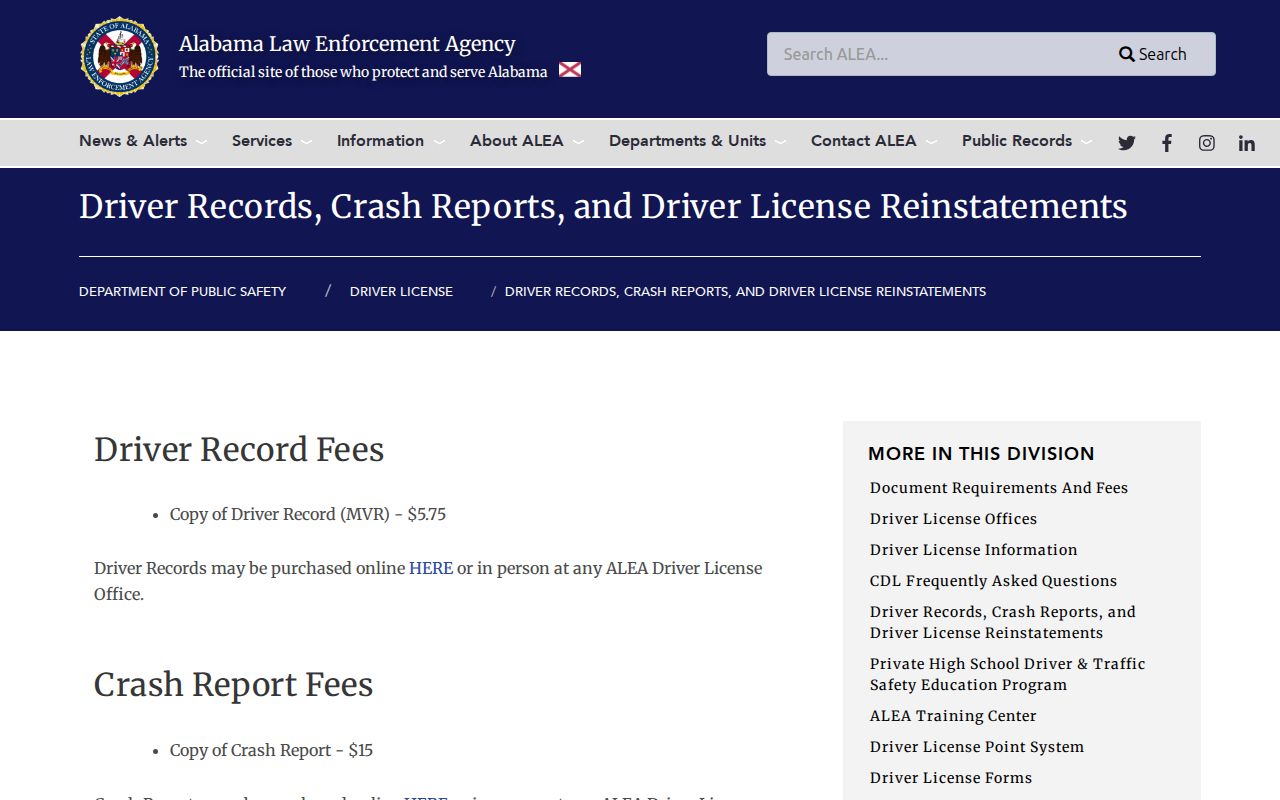
This image helps distinguish a state driver or crash record from the Circuit Clerk's filed criminal or traffic charge.
ALEA also publishes a Driver Record Subscription Service for authorized ongoing access.
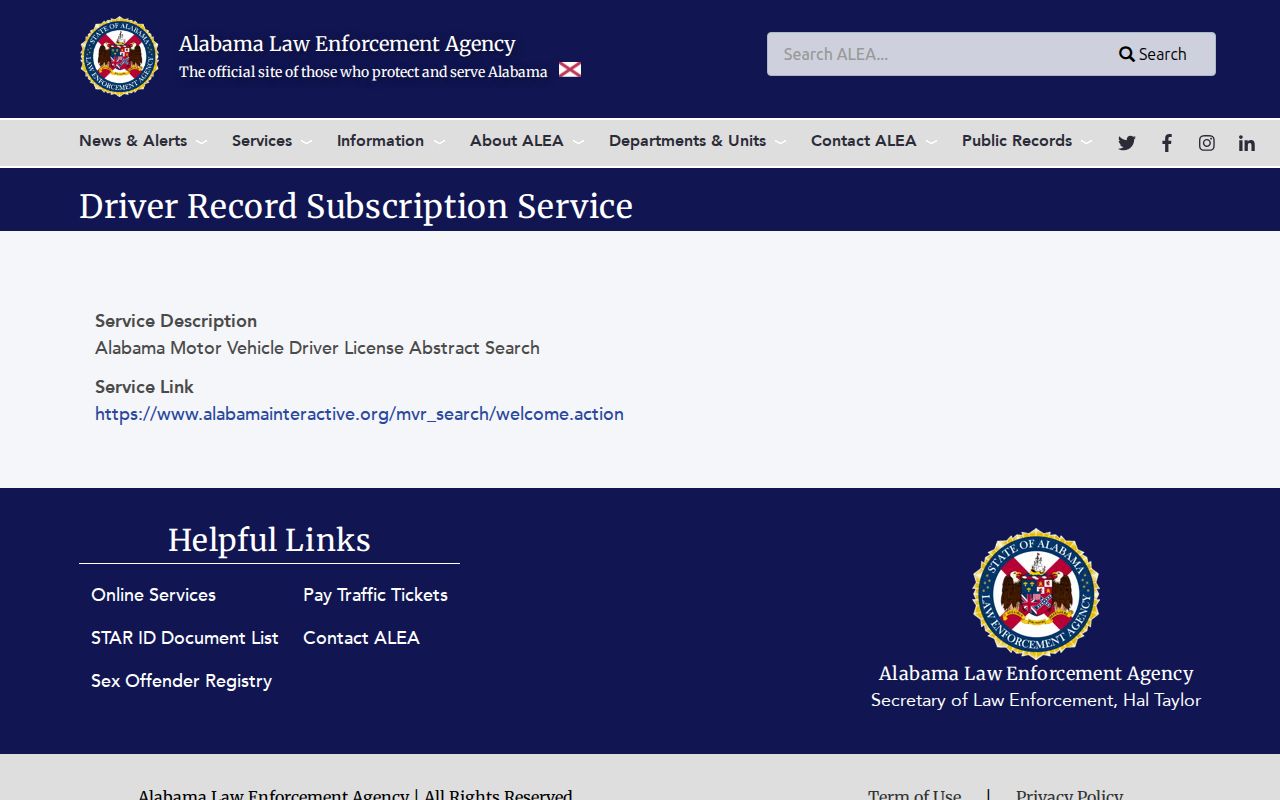
The subscription source remains a motor vehicle record channel, not a county arrest or criminal-case database.
For eligible traffic matters, ALEA's online traffic ticket service directs users to the state payment system.
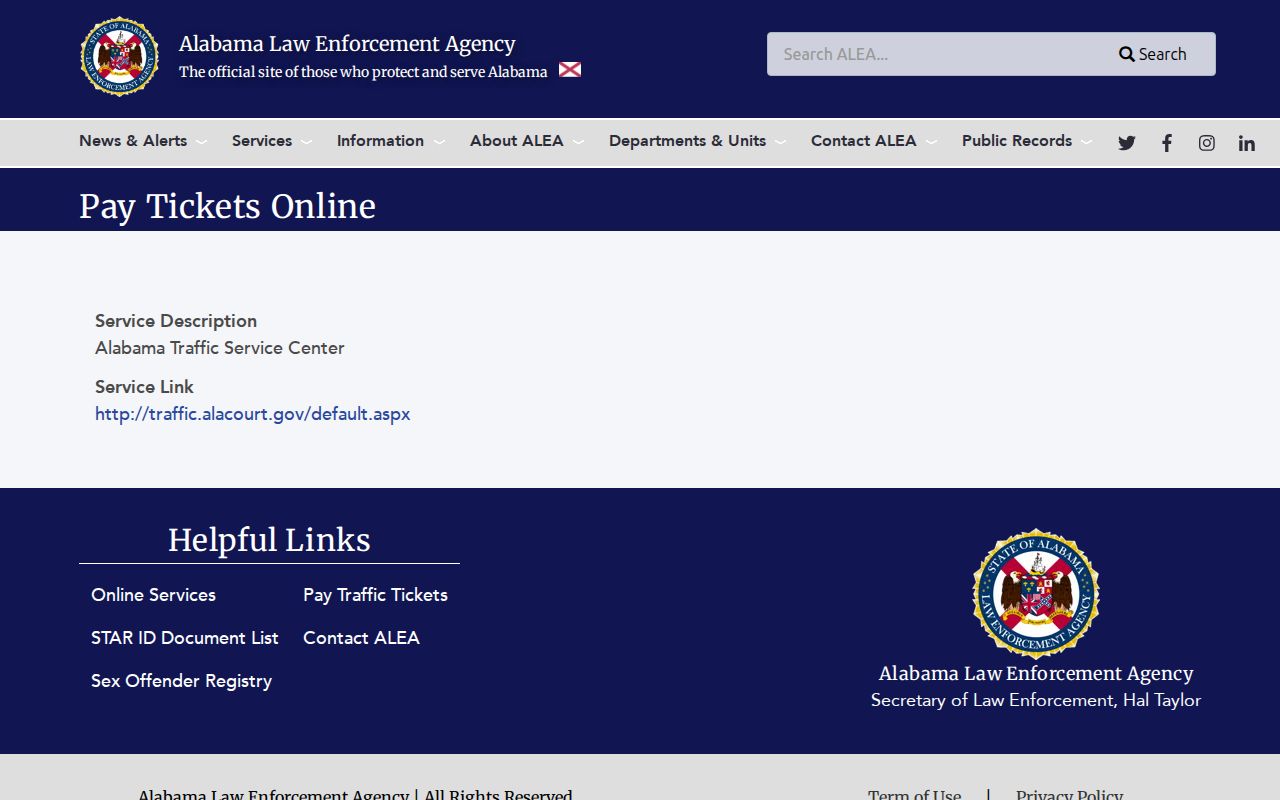
Payment may resolve an eligible citation, but the payment screen is not the full case file or a general arrest-record lookup.
Arrest Records and Identity Checks
A name result must be matched to the correct person, court, charge, and case. An arrest without conviction can remain visible unless restricted by law or order. Employment, housing, credit, insurance, and other regulated decisions require a lawful consumer-reporting process and required notices. A direct court or sheriff lookup is not automatically an FCRA-compliant background check.
Important: This privately operated resource is not a consumer reporting agency and cannot provide an FCRA-compliant background report.
Limits on Tallapoosa Arrest Records
Juvenile court records are confidential under Alabama law. Sealed and expunged charges are restricted. Public copies may redact Social Security numbers, account numbers, minors' identifiers, medical information, victim addresses, and protected attachments. Active investigations can also limit what a sheriff or police agency releases. A no-match search can mean a spelling issue, wrong court, non-digitized file, or legal restriction rather than proof that no event occurred.
Crash reports have their own access rule. The assigned image from Alabama Code Section 32-10-7 shows the crash-report eligibility source.
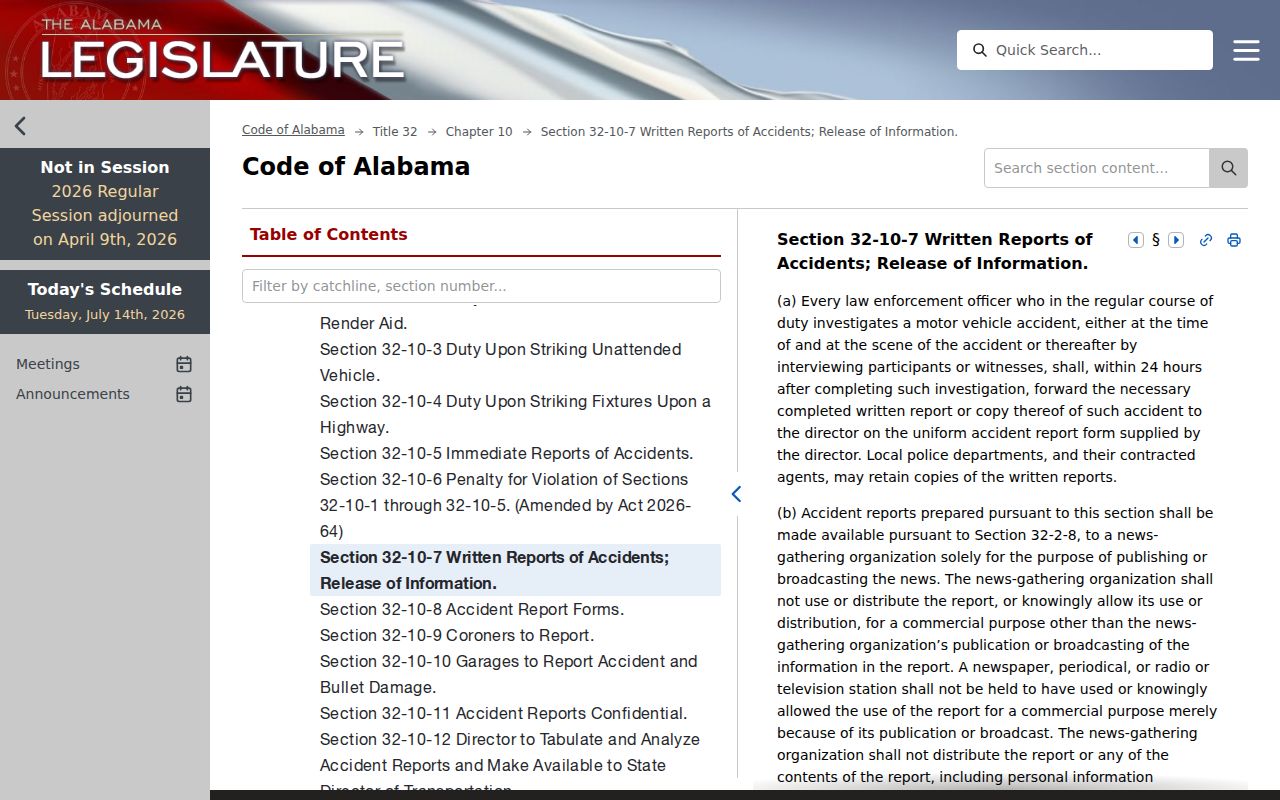
The image reinforces that a crash report follows a limited statutory access channel and remains distinct from a filed court charge.
Municipal sources require the same care. The Alexander City payment portal appears in the assigned image below.
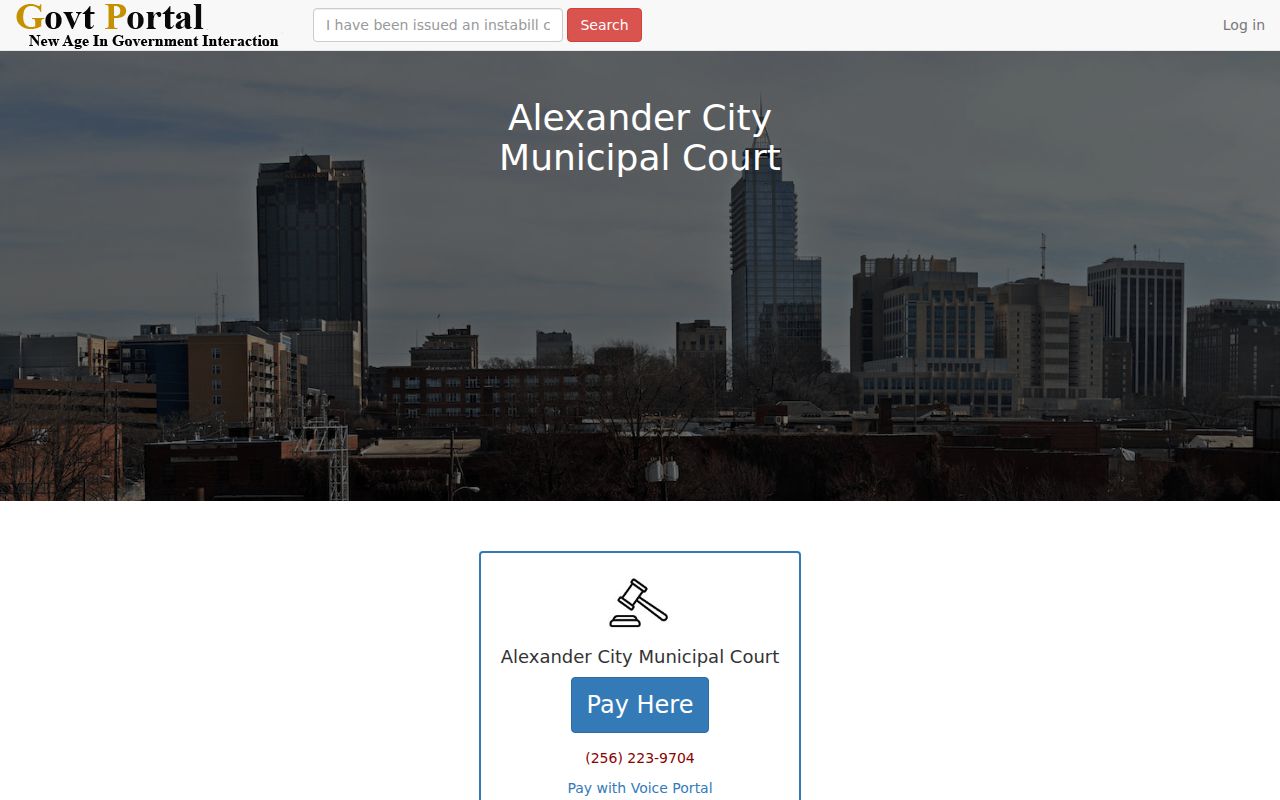
This portal supports municipal payment activity, but an active Alexander City warrant inquiry must be made in person with the police as the city instructs.